Simplifying Connectivity: Software-Defined WAN Solutions
A comprehensive guide to SD-WAN technology, architecture, and implementation. Learn how software-defined WAN solutions optimize network performance, reduce costs, and enable secure hybrid workforce connectivity.
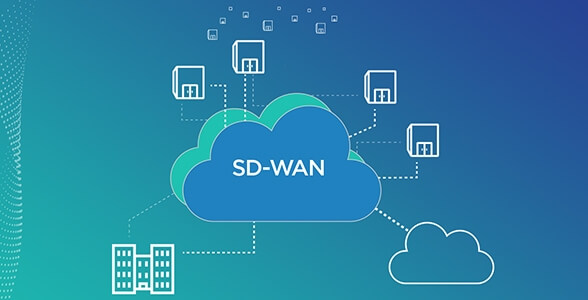
Software-Defined Wide Area Networking (SD-WAN) has evolved from an emerging technology to the standard approach for enterprise network connectivity. With the global SD-WAN market reaching $6.9 billion in 2024 and projected to grow to $18.58 billion by 2032, organizations across industries are replacing legacy WAN architectures with software-defined solutions that deliver better performance, lower costs, and integrated security.
The shift to hybrid work models, accelerated cloud adoption, and the proliferation of SaaS applications have fundamentally changed how enterprises think about network connectivity. Traditional hub-and-spoke architectures that backhaul all traffic through centralized data centers create latency, increase costs, and struggle to meet the performance requirements of real-time applications like video conferencing and cloud-based collaboration tools.
SD-WAN addresses these challenges by applying software-defined networking principles to wide area connectivity. Rather than relying solely on expensive MPLS circuits, SD-WAN enables organizations to leverage a combination of transport types—including broadband internet, LTE/5G, and private links—while maintaining application-aware traffic steering, centralized policy management, and integrated security controls.
This guide examines SD-WAN architecture, implementation considerations, the current vendor landscape, and the convergence with Secure Access Service Edge (SASE) that is reshaping how organizations approach network security and connectivity.
The Problem with Traditional WAN Architecture
Legacy WAN architectures were designed for a different era—one where applications resided in centralized data centers and users worked primarily from fixed office locations. These architectures exhibit several limitations that make them poorly suited for modern enterprise requirements.
MPLS Cost and Rigidity
Multiprotocol Label Switching (MPLS) circuits provide reliable, low-latency connectivity but at significant cost. Provisioning new MPLS circuits typically requires 30-90 days of lead time, making it difficult for organizations to respond quickly to business changes such as office relocations, acquisitions, or temporary site deployments. The per-megabit cost of MPLS often runs 5-10x higher than equivalent broadband bandwidth.
Inefficient Cloud Traffic Patterns
Traditional WANs route all traffic through central data centers before reaching the internet—a pattern called "tromboning" or "hairpinning." When users at branch locations access SaaS applications like Microsoft 365, Salesforce, or Workday, their traffic travels to headquarters, exits to the internet, reaches the cloud provider, and returns along the same inefficient path. This architecture adds latency and consumes expensive WAN bandwidth for traffic that could route directly to cloud services.
Limited Visibility and Control
Legacy routers provide limited visibility into application-level traffic patterns. Network administrators can see bandwidth utilization and interface statistics but lack the granular application awareness needed to make intelligent routing decisions. Implementing quality of service (QoS) policies requires manual CLI configuration at each device, creating operational overhead and increasing the risk of misconfigurations.
Challenging Branch Deployments
Deploying and managing networking equipment at branch locations requires skilled personnel and often necessitates site visits for installation, configuration changes, and troubleshooting. This operational model doesn't scale efficiently as organizations expand their branch footprint or support remote workers.
How SD-WAN Transforms Enterprise Connectivity
SD-WAN addresses traditional WAN limitations through a fundamentally different architectural approach that separates the control plane from the data plane and introduces application-aware traffic management.
Transport Independence
SD-WAN treats underlying transport circuits as commoditized bandwidth rather than differentiated services. A single SD-WAN edge device can aggregate multiple connection types—MPLS, broadband internet, dedicated internet access (DIA), LTE, and 5G—into a unified logical connection. The orchestrator dynamically routes traffic across available transports based on application requirements, link quality, and configured policies.
This transport independence enables several operational advantages:
- Cost optimization: Organizations can shift traffic to lower-cost broadband connections while reserving MPLS for applications requiring guaranteed performance
- Bandwidth aggregation: Multiple links can be bonded to provide aggregate throughput exceeding any single connection
- Rapid deployment: New sites can be brought online using readily available broadband or LTE connections while permanent circuits are provisioned
- Resilience: Automatic failover between transports provides sub-second recovery from link failures
Application-Aware Routing
SD-WAN solutions incorporate deep packet inspection (DPI) engines that identify applications by analyzing traffic patterns, signatures, and metadata. This application awareness enables policies like:
- Route Microsoft Teams traffic over the lowest-latency path regardless of cost
- Direct Salesforce traffic to local internet breakout rather than backhauling to the data center
- Steer bulk backup traffic to high-bandwidth, higher-latency connections
- Apply different SLA thresholds for interactive applications versus background transfers
Modern SD-WAN platforms can identify thousands of applications and support custom application definitions for internal or specialized software.
Centralized Orchestration
All SD-WAN solutions provide a centralized management interface—typically a cloud-hosted or on-premises controller—that serves as the single point of policy definition and monitoring. Network administrators define intent-based policies that the orchestrator translates into device-specific configurations and distributes to edge appliances.
This centralized model enables:
- Zero-touch provisioning: New edge devices automatically connect to the orchestrator, download their configuration, and become operational without on-site technical expertise
- Consistent policy enforcement: Changes propagate across the entire network within minutes rather than requiring device-by-device updates
- Unified visibility: Real-time dashboards display application performance, link utilization, and security events across all locations
- Simplified compliance: Centralized logging and configuration management support audit requirements
Dynamic Path Selection
SD-WAN continuously monitors the quality of available network paths using metrics including latency, jitter, and packet loss. When path quality degrades below configured thresholds, the solution automatically reroutes affected traffic to better-performing alternatives.
This capability is particularly valuable for addressing "brownout" conditions—situations where a circuit remains technically operational but delivers degraded performance that impacts user experience. Traditional WANs typically require manual intervention to identify and address brownouts, while SD-WAN handles remediation automatically.
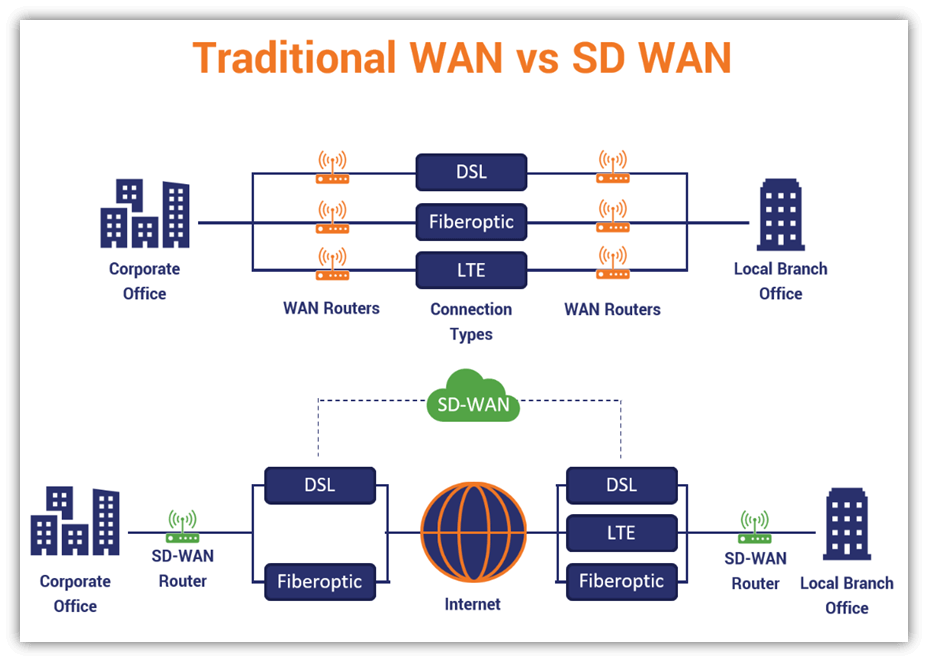
SD-WAN Architecture Components
Understanding SD-WAN architecture requires familiarity with several interconnected components that work together to deliver software-defined connectivity.
Edge Appliances
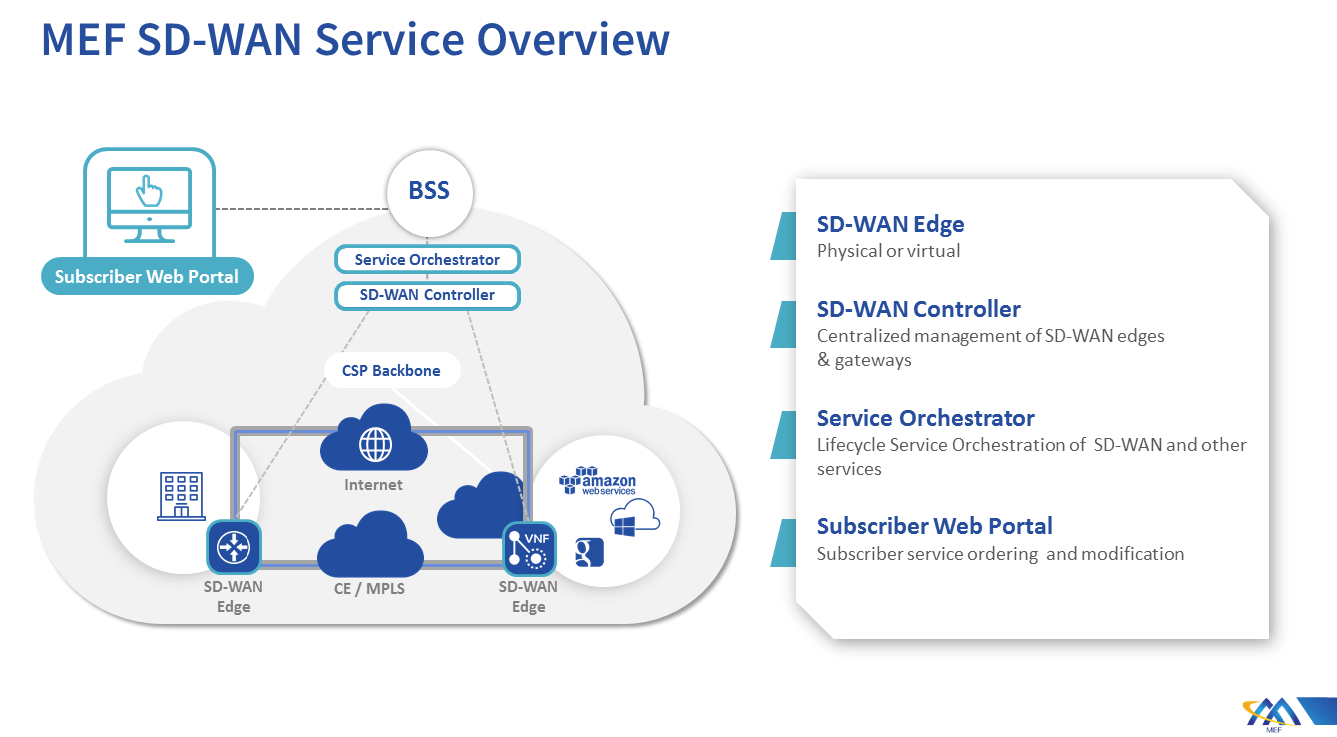
SD-WAN edge devices deploy at branch locations, data centers, and cloud environments. These appliances—available as physical hardware, virtual machines, or cloud-native instances—terminate WAN connections and execute forwarding decisions based on policies received from the orchestrator.
Edge appliances typically support:
- Multiple WAN interfaces (Ethernet, fiber, cellular)
- LAN switching and routing capabilities
- Integrated security functions (firewall, IPS, URL filtering)
- Hardware acceleration for encryption and traffic processing
Orchestrator/Controller
The orchestrator serves as the management and control plane for the SD-WAN deployment. It maintains the authoritative policy database, monitors edge device health and link status, and provides the administrative interface for network operations.
Cloud-hosted orchestrators reduce operational overhead but raise data sovereignty considerations for some organizations. On-premises deployment options address compliance requirements but require infrastructure investment and ongoing maintenance.
Virtual Overlays
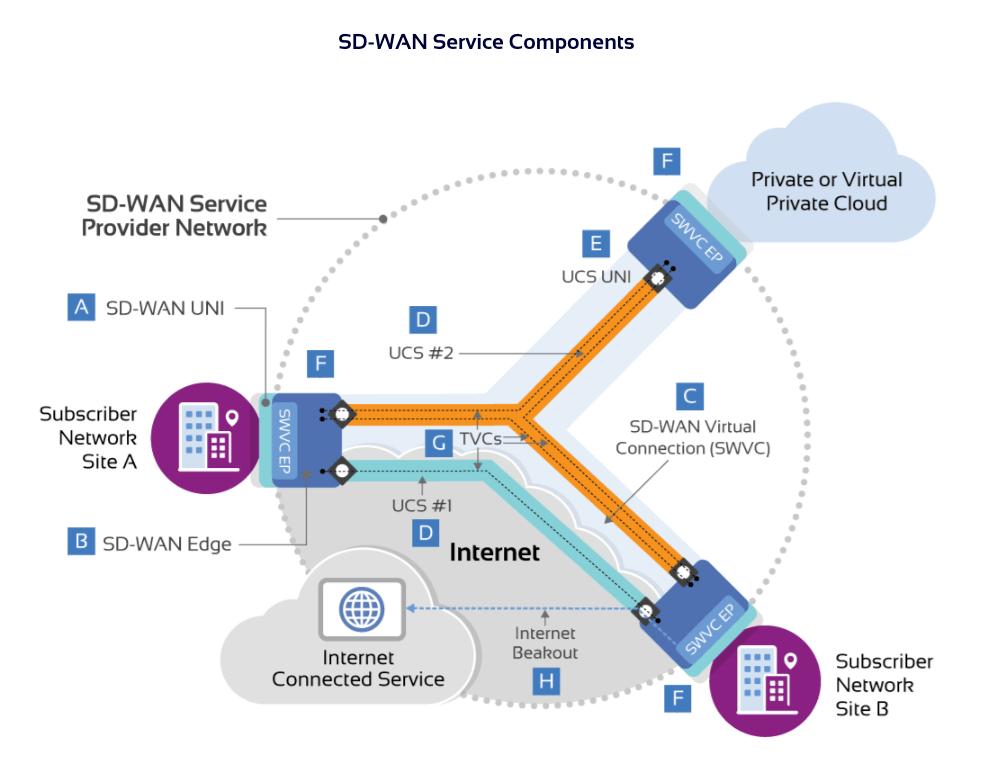
SD-WAN creates encrypted overlay tunnels between edge devices, establishing a logical network topology independent of the underlying transport infrastructure. These overlays—typically using IPsec or proprietary protocols—enable secure communication across untrusted networks like the public internet.
Virtual overlays provide flexibility in network design:
- Hub-and-spoke: Branch sites connect to central hubs for simplified management and centralized security inspection
- Full mesh: Direct site-to-site connectivity minimizes latency for inter-branch communication
- Regional hub: Intermediate topology that balances performance with operational simplicity
Gateways
SD-WAN gateways provide connectivity to external networks including cloud providers, SaaS applications, and partner networks. Strategic gateway placement enables optimized routing to cloud resources—a significant advantage over backhauling all internet traffic through corporate data centers.
Leading SD-WAN vendors operate global gateway networks with points of presence near major cloud regions, enabling customers to route traffic through the nearest gateway for optimal performance.
Business Benefits of SD-WAN Implementation
Organizations implementing SD-WAN realize benefits across multiple dimensions including cost reduction, operational efficiency, and application performance.
Quantifiable Cost Savings
SD-WAN enables organizations to reduce WAN spending through several mechanisms:
- Transport cost reduction: Shifting traffic from MPLS to broadband can reduce per-site connectivity costs by 50-70%
- Bandwidth optimization: WAN optimization features including deduplication, compression, and caching reduce bandwidth requirements
- Operational efficiency: Zero-touch provisioning and centralized management reduce the labor required for network operations
- Hardware consolidation: Integrated security functions can eliminate the need for separate branch firewalls and routers
Organizations typically achieve ROI within 12-18 months of SD-WAN deployment, with ongoing savings compounding as legacy circuits are decommissioned.
Enhanced Application Performance
SD-WAN's application-aware routing ensures that business-critical applications receive appropriate network resources:
- Reduced latency: Direct cloud access eliminates the latency penalty of backhauling traffic through data centers
- Consistent experience: Dynamic path selection maintains application performance during network degradation
- Prioritized traffic: QoS policies ensure that real-time applications like voice and video receive preferential treatment
- Optimized SaaS access: Dedicated optimization for popular SaaS platforms improves responsiveness for cloud-based productivity tools
Operational Agility
SD-WAN's software-defined approach accelerates network operations:
- Rapid site deployment: New locations can be operational within hours rather than weeks
- Policy-driven changes: Network modifications are implemented through policy updates rather than device-by-device configuration
- Simplified troubleshooting: Centralized visibility enables faster identification and resolution of network issues
- Support for hybrid work: Remote access capabilities extend SD-WAN benefits to work-from-home employees
Core SD-WAN Capabilities
SD-WAN solutions differentiate from traditional WAN through several foundational capabilities:
- Centralized policy management across all WAN connections
- Automatic remediation of brownout conditions (latency, jitter, packet loss)
- Transport-independent operation across MPLS, broadband, LTE, 5G, and satellite
- Simultaneous use of multiple discrete transport paths
- Application recognition engine enabling intelligent traffic routing
- Integrated security functions including encryption, firewall, and threat protection
The 2024 SD-WAN Vendor Landscape
The SD-WAN market has consolidated around several established leaders while remaining competitive across different market segments. The 2024 Gartner Magic Quadrant for SD-WAN (published September 2024) identifies six Leaders based on completeness of vision and ability to execute.
Market Leaders
Cisco maintains the largest SD-WAN market share with over 173,000 customers and has been recognized as a Gartner Leader for five consecutive years. Cisco's SD-WAN portfolio includes the Catalyst SD-WAN (formerly Viptela) and Meraki SD-WAN platforms, offering options for both enterprise and mid-market segments. Cisco's strength lies in integration with its broader networking and security portfolio.
Fortinet has been positioned as a Leader for five consecutive years, recognized for the highest ability to execute in the 2024 evaluation. Fortinet's SD-WAN is integrated into its FortiGate next-generation firewall platform, providing converged networking and security that appeals to organizations prioritizing security-driven networking.
HPE Aruba (formerly Silver Peak, acquired September 2020) delivers EdgeConnect SD-WAN with strong WAN optimization heritage. HPE has been named a Gartner Leader for seven consecutive years and emphasizes application performance optimization and business intent overlays that simplify policy definition.
Palo Alto Networks offers Prisma SD-WAN (formerly CloudGenix, acquired March 2020) with industry-leading completeness of vision according to Gartner's 2024 assessment. Prisma SD-WAN integrates with Palo Alto's Prisma SASE platform, positioning it well for organizations pursuing converged networking and security.
Broadcom (VMware) provides VeloCloud SD-WAN, which Broadcom acquired through its November 2023 purchase of VMware. The solution emphasizes cloud-first architecture and integration with VMware's virtualization and multi-cloud management portfolio, though the acquisition has created uncertainty about future product direction.
Versa Networks offers a unified SASE platform that includes SD-WAN, security, and analytics capabilities. Versa targets large enterprises and service providers with flexible deployment options and a single-stack architecture.
Selecting the Right Vendor
Vendor selection should align with organizational requirements across several dimensions:
| Consideration | Key Questions |
| -------------- | --------------- |
| Security Integration | Does the organization prefer converged networking/security or best-of-breed integration? |
| Cloud Strategy | Which cloud providers are strategic, and how well does the vendor optimize connectivity to those platforms? |
| Existing Infrastructure | Does the organization have incumbent vendor relationships that create integration advantages? |
| Operational Model | Will the solution be managed internally, through a partner, or as a managed service? |
| Scale Requirements | How many sites, users, and bandwidth does the deployment need to support? |
| SASE Roadmap | Is single-vendor SASE a near-term objective that should influence SD-WAN selection? |
SD-WAN and SASE Convergence
The most significant trend reshaping SD-WAN is convergence with cloud-delivered security under the Secure Access Service Edge (SASE) framework. Gartner projects that by 2027, 65% of new SD-WAN purchases will be part of single-vendor SASE offerings, up from approximately 20% in 2024.
Understanding SASE Architecture
SASE combines SD-WAN capabilities with Security Service Edge (SSE) functions delivered from cloud points of presence. The SSE component includes:
- Secure Web Gateway (SWG): Inspects and filters web traffic to protect against malicious content
- Cloud Access Security Broker (CASB): Provides visibility and control over SaaS application usage
- Zero Trust Network Access (ZTNA): Replaces VPN with identity-based application access
- Firewall as a Service (FWaaS): Delivers next-generation firewall capabilities from the cloud
When combined with SD-WAN's transport optimization and application-aware routing, SASE delivers a comprehensive framework for securing and optimizing access to applications regardless of user location or hosting environment.
Single-Vendor vs. Dual-Vendor SASE
Organizations pursuing SASE have two primary approaches:
Single-vendor SASE sources both SD-WAN and SSE capabilities from a single provider, simplifying procurement, integration, and ongoing management. This approach offers unified policy management, consistent user experience, and reduced vendor coordination overhead. However, it may require compromises if the selected vendor isn't best-in-class across all capabilities.
Dual-vendor SASE pairs SD-WAN from one vendor with SSE from another, enabling organizations to select best-of-breed solutions for each function. This approach provides flexibility but introduces integration complexity and requires coordination between vendor support teams.
Most organizations currently operate dual-vendor architectures because they have existing investments in either SD-WAN or SSE. However, the trend toward single-vendor consolidation is accelerating as platform capabilities mature.
AI and Machine Learning in SD-WAN
Modern SD-WAN platforms increasingly incorporate artificial intelligence and machine learning to enhance operations:
- Predictive analytics: Identify potential issues before they impact users
- Anomaly detection: Recognize unusual traffic patterns that may indicate security threats or configuration problems
- Automated optimization: Continuously tune policies based on observed application performance
- Natural language interfaces: Enable administrators to query network status and make changes using conversational commands
These AI capabilities represent a key differentiator among vendors and are particularly valuable for organizations managing large, complex deployments.
Implementation Best Practices
Successful SD-WAN deployment requires careful planning across technical, operational, and organizational dimensions.
Pre-Deployment Assessment
Before selecting a solution or beginning deployment, organizations should:
- Inventory current WAN infrastructure: Document existing circuits, bandwidth, costs, and contract terms
- Catalog applications: Identify business-critical applications and their network requirements (bandwidth, latency sensitivity, availability needs)
- Map traffic patterns: Understand current traffic flows between sites, to cloud services, and to the internet
- Define security requirements: Determine which security functions will be provided by SD-WAN versus separate security infrastructure
- Establish success metrics: Define KPIs that will measure deployment success (cost savings, performance improvement, operational efficiency)
Deployment Approach
Most organizations benefit from a phased deployment approach:
Phase 1: Pilot
Deploy SD-WAN at 3-5 representative sites including a mix of large and small locations, different geographic regions, and varying connectivity options. Validate application performance, failover behavior, and management workflows.
Phase 2: Staged Rollout
Expand deployment in waves, prioritizing sites based on factors like lease renewals for existing circuits, business criticality, and operational readiness. Maintain the ability to fall back to existing WAN connectivity during the transition period.
Phase 3: Optimization
After initial deployment, refine policies based on observed traffic patterns and application performance. Implement advanced features like direct cloud access, integrated security functions, and remote user support.
Ongoing Operations
Effective SD-WAN operations require:
- Continuous monitoring: Track application performance, link utilization, and security events through the centralized orchestrator
- Regular policy reviews: Periodically assess whether policies remain aligned with business requirements as applications and work patterns evolve
- Capacity planning: Monitor bandwidth utilization trends and provision additional capacity before constraints impact performance
- Security updates: Keep edge appliances current with security patches and software updates
- Documentation: Maintain accurate records of the network topology, policies, and operational procedures
Key Considerations for SD-WAN Migration
Organizations evaluating SD-WAN should address several strategic questions before proceeding.
Build vs. Buy Decision
DIY SD-WAN provides maximum control and customization but requires internal expertise for design, deployment, and ongoing management. This approach suits organizations with strong networking teams and specific requirements that commercial solutions don't address.
Managed SD-WAN services shift operational responsibility to a provider, reducing internal resource requirements but limiting customization flexibility. Managed services suit organizations prioritizing operational simplicity over granular control.
Co-managed models split responsibilities between the organization and a service provider, combining internal expertise with external support for specific functions.
Circuit Strategy
SD-WAN doesn't eliminate the need for thoughtful circuit planning:
- Diversity: Ensure path diversity by sourcing connections from multiple providers and using different access technologies (fiber, cable, cellular)
- Bandwidth sizing: Aggregate bandwidth should accommodate peak utilization plus growth; a common starting point is 2x the bandwidth of the legacy primary circuit
- SLA requirements: Determine which applications require guaranteed performance and whether those requirements can be met with internet-based connectivity or require dedicated circuits
Security Architecture
Determine where security inspection will occur:
- Branch-based security: SD-WAN edge devices provide firewall, IPS, and other security functions at each location
- Cloud-based security: Traffic routes to cloud security services for inspection before reaching destinations
- Centralized security: Security inspection occurs at data center or hub locations
- Hybrid: Different traffic types receive security treatment at different points based on risk and performance requirements
Frequently Asked Questions
How does SD-WAN improve cloud application performance?
SD-WAN improves cloud performance through several mechanisms. Direct cloud access (local internet breakout) eliminates the latency penalty of backhauling traffic through centralized data centers. Application-aware routing ensures cloud traffic uses optimal paths based on real-time performance metrics. Many SD-WAN vendors operate cloud gateway networks with points of presence near major cloud provider regions, further reducing latency. Additionally, integrated WAN optimization features like deduplication and compression reduce bandwidth consumption for cloud-bound traffic.
Can SD-WAN support secure remote work?
Yes, most modern SD-WAN platforms include remote access capabilities that extend the SD-WAN fabric to individual users. These solutions typically provide lightweight clients that establish encrypted tunnels to the nearest SD-WAN gateway, enabling remote workers to access applications with the same policy controls and performance optimization available to branch office users. For organizations pursuing SASE, remote access integrates with Zero Trust Network Access (ZTNA) capabilities that provide more granular, identity-based access control than traditional VPN.
What is the typical ROI timeline for SD-WAN deployment?
Most organizations achieve positive ROI within 12-18 months of SD-WAN deployment. Cost savings derive from reduced circuit spending (shifting from MPLS to broadband), lower operational overhead (centralized management reduces labor), and avoided costs (deferred equipment purchases, reduced troubleshooting time). Performance improvements and business agility benefits provide additional value that's harder to quantify but often exceeds direct cost savings.
How does SD-WAN integrate with existing security infrastructure?
SD-WAN solutions support multiple integration patterns with security infrastructure. Service chaining routes traffic through existing security appliances for inspection. API integrations share policy and threat intelligence between SD-WAN and security platforms. Built-in security functions can replace separate branch security devices. For organizations pursuing SASE, SD-WAN integrates with cloud-delivered security services through the vendor's platform or standardized interfaces to third-party providers.
Should we wait for SASE or deploy SD-WAN now?
Organizations with immediate WAN modernization needs should not defer SD-WAN deployment while waiting for SASE maturity. Current SD-WAN solutions provide significant value independent of SASE, and most vendors offer migration paths to converged platforms as they evolve. When selecting an SD-WAN solution, organizations should consider vendors' SASE roadmaps and ensure the chosen platform aligns with their security convergence timeline.
Conclusion
SD-WAN has matured from an innovative approach to WAN connectivity into the standard architecture for enterprise networking. Organizations that haven't begun their SD-WAN journey face increasing competitive disadvantage as cloud adoption accelerates, hybrid work models persist, and legacy WAN limitations become more acute.
The convergence of SD-WAN with cloud-delivered security under the SASE framework represents the next evolution in enterprise networking. Organizations should evaluate SD-WAN and SASE together, selecting solutions that address immediate connectivity requirements while positioning for security convergence over a realistic timeline.
Success with SD-WAN requires more than technology selection—it demands thoughtful planning, phased implementation, and ongoing operational attention. Organizations that approach SD-WAN as a strategic initiative rather than a tactical project will realize the full potential of software-defined networking to improve application performance, reduce costs, and enable business agility.
Share this article
Comments
Comments are powered by GitHub Discussions via Giscus.
To enable comments, configure Giscus at giscus.app and update the Comments component with your repo settings.